Personality States of the Union
David M. Condon, Sara J. Weston
*Collabra: Psychology*
Why we asked
Personality differs across regions and countries, and those differences go along with things like health, income, and voting. Personality is also known to change within a single person over time. We wondered whether the same could happen to a whole country. The COVID-19 pandemic gave us a chance to look, because it changed daily life for millions of people at once, and 2020 brought a string of other major national events.
What we did
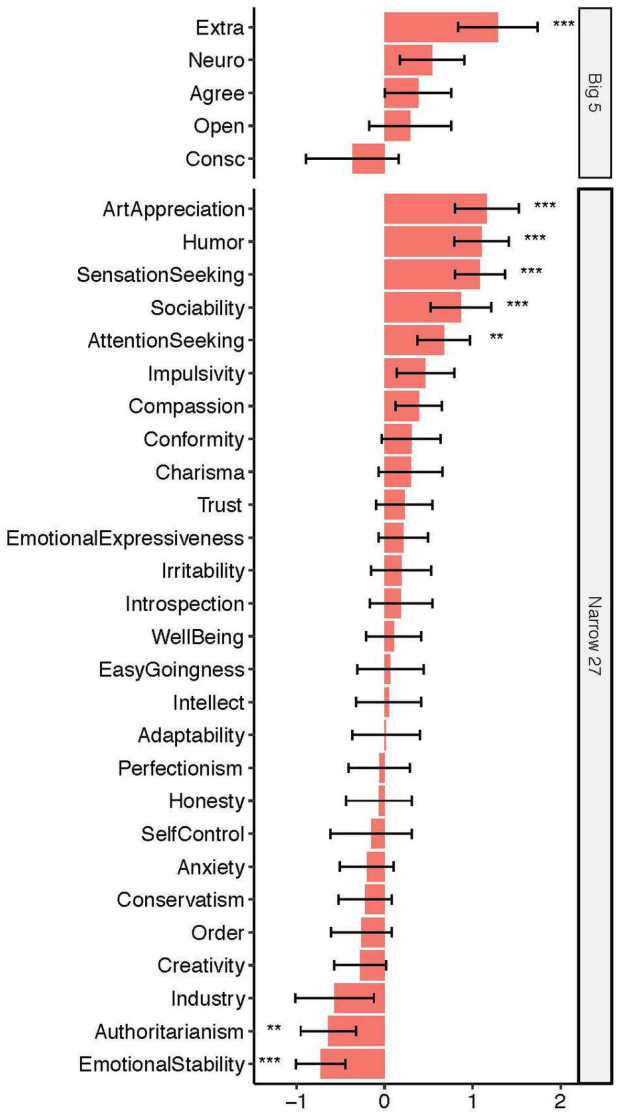
We used data from the SAPA Project, an ongoing online personality assessment, and included 40,887 participants living in the United States in 2020. To estimate the nation’s personality on each day, we averaged responses by day, weighted them to match U.S. Census figures for age, gender, race, and education, and smoothed across seven days. We asked three questions. First, did average personality differ after the national emergency declaration on March 13 from the weeks before it? Second, how much did daily personality states fluctuate through the year? Third, did those fluctuations go along with daily COVID-19 cases and S&P 500 closing prices?
We preregistered a focus on neuroticism and related traits. The preregistration covered data through June 1, and we extended the correlation analyses through December.
What we found
Social traits went up after the declaration, including extraversion, sociability, humor, and sensation seeking, along with art appreciation. Emotional stability and authoritarianism went down. Neuroticism did not change. The social result surprised us, since people were told to stay home. Our best guess, which is speculation, is a deprivation effect: we may not think of ourselves as social people until we cannot go out. Another possibility is that more extraverted people were more likely to take the survey during lockdown, and our data cannot separate the two. The same comparison in 2019 showed little change, and 2018 showed changes in different traits.
Daily levels of the affective traits moved around from one day to the next, and they were associated with COVID-19 cases and the S&P 500.
What it means
These data are cross-sectional and skew young and female, so we describe patterns and do not claim that events changed anyone’s personality. National personality states may be worth tracking alongside other indicators.